Friday, May 16, 2014

The Virtue of "If"

The previous blog post (“In a Manner of Speaking”) noted the confusion that can arise because the word “more” can be used as a modifier of quantity or of quality. What about its opposite, “less”?
“Less” has problems, but none of its own making. The problems are caused by other words. There’s its almighty conflict with “fewer.” Think of those benighted souls who grind their teeth when they approach a supermarket checkout counter with a sign reading, “Ten Items or Less.” Those are people who believe in a rule that goes like this (according to Webster’s Dictionary of English Usage):

fewer refers to number among things that are counted, and less refers to quantity or amount among things that are measured.
It is a rule that is “simple enough and easy enough to follow,” says the Dictionary. It does have one fault: “it is not accurate for all usage.” And the Dictionary proceeds to offer a zillion (I exaggerate) examples of writers “violating” what is in reality a non-rule.


*
The other word that creates a problem for “less” is “than.” They so often come as a pair, and, like “more,” the pair can involve quantity or quality. The “less than” quantity usage should not be a problem (unless you refuse to get on the check-out line mentioned above). But as for the quality issue, consider this example of a favorite usage of newspaper editorial writers:

Mr. Jones was less than honest in his remarks about his role in the affair.
Er. . . Let’s see: if being honest is an all-or-nothing thing, then being “less than” honest is really to be what? “Not honest”? “Dishonest”?

“Less than honest”; “less than frank”; “less than forthcoming” and the rest of those editorial constructions are prime examples of weaseling, seeming to be stating something, while allowing oneself to slither away from full responsibility for one’s words (“No. I never used the word “dishonest”).

*
Weasel words are all over the place. Consider the following Staples ad:

15% OFF

your entire in-store purchase.*

Exclusions apply.*


Weasels are not only words—look at that wonderful asterisk, which morphs the ad into “Everything—but not everything.”


One could go on and on about weasels (political ones, critical ones, business ones, etc.--whole books have been written on the subject) especially about the prime weasel de nos jours—the non-apology apology. Such as the one that begins, “If anyone was offended . . . .”


So, to avoid filling a book, let's end here with a focus on that contender for number one weasel: “if,” and as usual we turn to Shakespeare:


As You Like It (Act V, Scene 4)

JAQUES. But, for the seventh cause: how did you find the quarrel on the seventh cause?
TOUCHSTONE. Upon a lie seven times removed- bear your body more seeming, Audrey- as thus, sir. I did dislike the cut of a certain courtier's beard; he sent me word, if I said his beard was not cut well, he was in the mind it was. This is call'd the Retort Courteous. If I sent him word again it was not well cut, he would send me word he cut it to please himself. This is call'd the Quip Modest. If again it was not well cut, he disabled my judgment. This is call'd the Reply Churlish. If again it was not well cut, he would answer I spake not true. This is call'd the Reproof Valiant. If again it was not well cut, he would say I lie. This is call'd the Countercheck Quarrelsome. And so to the Lie Circumstantial and the Lie Direct.
JAQUES. And how oft did you say his beard was not well cut?
TOUCHSTONE. I durst go no further than the Lie Circumstantial, nor he durst not give me the Lie Direct; and so we measur'd swords and parted.
JAQUES. Can you nominate in order now the degrees of the lie?
TOUCHSTONE. O, sir, we quarrel in print by the book, as you have books for good manners. I will name you the degrees. The first, the Retort Courteous; the second, the Quip Modest; the third, the Reply Churlish; the fourth, the Reproof Valiant; the fifth, the Countercheck Quarrelsome; the sixth, the Lie with Circumstance; the seventh, the Lie Direct. All these you may avoid but the Lie Direct; and you may avoid that too with an If. I knew when seven justices could not take up a quarrel; but when the parties were met themselves, one of them thought but of an If, as: 'If you said so, then I said so.' And they shook hands, and swore brothers. Your If is the only peace-maker; much virtue in If.
“Much virtue in If”--especially when it's time to weasel away.

----------------------------------------------------------------------------------------


Webster’s Dictionary of English Usage is published by Merriam-Webster


Saturday, May 10, 2014

In a Manner of Speaking

In the last blog post, "Faces and Places," I ventured "to slightly revise Hamlet," by writing, "I am native there and to the manner born." It is possible (even probable) that many (if not most) people did not recognize that the one word changed was "there" from the original "here," but thought that the change was to "manner" from "manor." Such is the curse of homonyms--and--more importantly, not knowing the original sources of quotations.

In Act I, Scene 4 of Hamlet, the Prince, Horatio, and Marcellus are on the battlements of Elsinore awaiting (they hope) the re-appearance of Hamlet's father's ghost. In the meantime, below them in the castle, they hear "A flourish of trumpets, and ordnance shot off." Horatio, clearly surprised, asks, “What does this mean, my lord?” Hamlet informs him: 
The King doth wake to-night and takes his rouse,
Keeps wassail*, and the swagg'ring upspring reels,
And, as he drains his draughts of Rhenish down,
The kettledrum and trumpet thus bray out
The triumph of his pledge.
 “Is it a custom?” asks Horatio. And with Hamlet’s response Confusion makes his entrance.


Ay, marry, is't;
But to my mind, though I am native here
And to the manner born, it is a custom
More honour'd in the breach than the observance.

Indeed, a double dose of Confusion, that merry addler of people's brains.


As a pun (one assumes in this case the creators really did know the original), the title of the successful British sitcom To the Manor Born (1979-1981), starring Penelope Keith and Peter Bowles worked perfectly, for the series involved the desire of the previous occupant (now rather impoverished), Audrey fforbes-Hamilton, to regain possession of the manor from the present owner, the nouveau-riche supermarket tycoon, Richard DeVere (original name, Polouvicka). Now a manor is a pretty nice place to dwell in, I imagine (being an American peasant myself), but consider that Hamlet is a prince and calls the castle Elsinore his home (when he is not off studying at Wittenberg). Thus, he's not likely to be calling himself "manor born." 

Recall that Horatio's question was about "custom"; Hamlet's reply is that the wassailing is customary, but that even though he is native to the culture, it is a practice of which he disapproves. To his mind, he says (and here's the second bit of Confusion's mischief),

. . . it is a custom
More honour'd in the breach than the observance.

It's that word "more," which can modify something quantitative or something qualitative. "I caught more fish than you today"--quantitative. "The judge's sentence was more lenient than the guilty party deserved"--qualitative. Hamlet's statement is a qualitative judgment (as we will see in a moment). And the misuse of his phrase arises because people take the "more" as signalling a quantitative observation, rather than a moral judgment. Thus  we get the creeping-along puritanical motorist who's being passed by all other drivers complaining that the speed limit is "more honored (sorry, but as I said above, I'm American) in the breach (i.e., not being observed) than in the observance."


After making the above remarks, Hamlet goes on for twenty-two lines to complain to Horatio how such customs of hard drinking make Danes 

traduc'd and tax'd of other nations;
They clip [call] us drunkards and with swinish phrase
Soil our addition; and indeed it takes
From our achievements, though perform'd at height, 

The pith and marrow of our attribute.
To better explain the origin of the negative reputation of his nation, Hamlet uses the analogy of how individual men--men with “the stamp of one defect,”—are forever branded in the eyes of others by that fault, no matter what “virtues else—be they as pure as grace” they may have. 
 

 *
Back in August, 2011 the blog post entitled "Ask the Wrong Question . . ."** focused on Prof. Joshua Knobe of Yale, a pioneer in the field of experimental philosophy, who had the observation that "people are more likely to assign blame for things that go wrong than to give credit for things that go right" (Stanford magazine)*** named after him--the "Knobe Effect." (Isn't this where we're all supposed to go "Duh"?) The Stanford article (Knobe's an alum) goes on to pose (in paraphrase) some of Knobe's questions ensuing from his "Effect:"


Why should the results of an action have a bearing on intentionality? And when it comes to questions of character, why do we tend to give more weight to negativity? Why does it sometimes happen that a single misdeed in a lifetime of otherwise exemplary behavior can destroy a reputation? 

The article points out that "Knobe has office space in both the philosophy and psychology departments at Yale."

Perhaps if he had space in the English department, he'd have learned that Shakespeare dealt with the issue over 400 years ago.  

***


Tuesday, April 29, 2014

Faces and Places

Reading a magazine yesterday, I came upon a photograph of multi-billionaire Warren Buffett.


I was reminded of the time not so long ago that a woman said that I looked like Mr. Buffett.

“No,” I replied, “I don't have his looks; I have his money.”

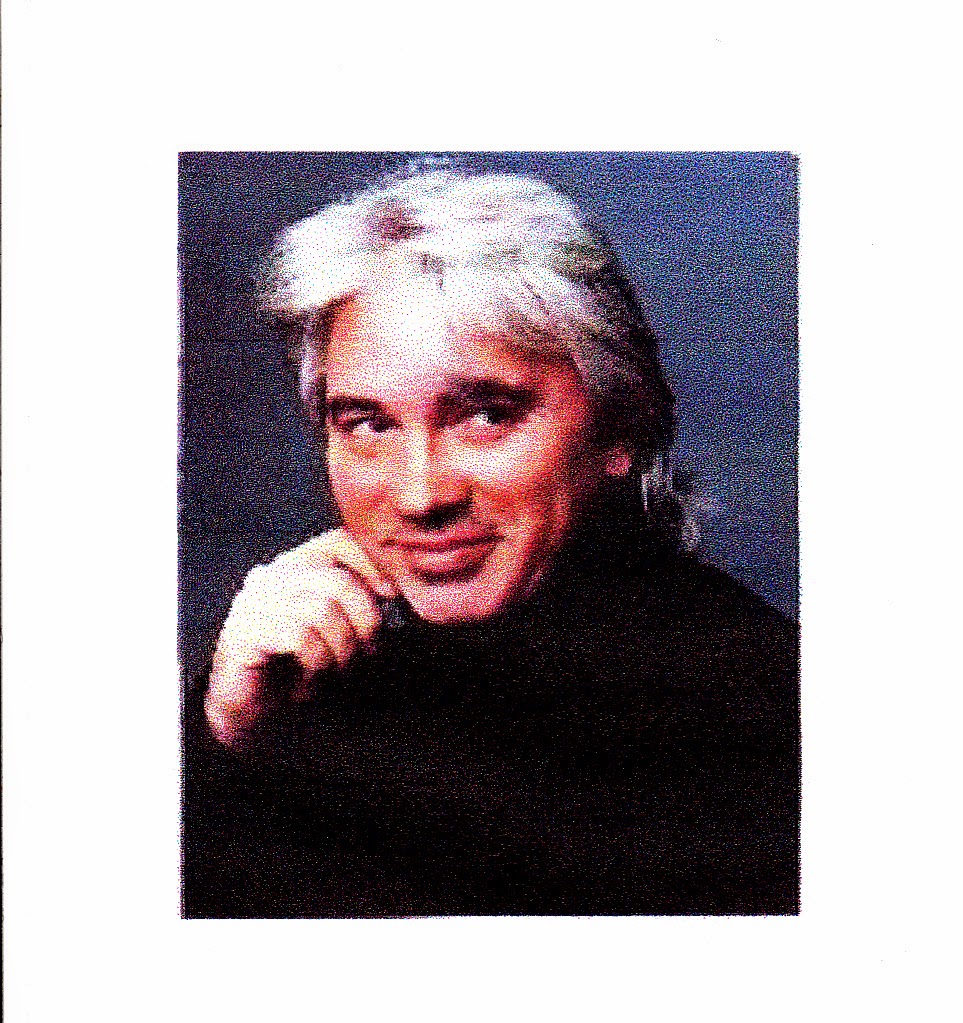
A few years before that, I was at Carnegie Hall when I felt a tap on my shoulder. It was another woman with an idea of someone I resembled. “Are you the Russian baritone Dmitri Hvorostovsky?” she inquired.

“I'm not Russian; I'm not a baritone; and I can't carry a tune,” I replied.


It must have been the hair.

The earliest alleged resemblance that I can recall at this late date was to the actor Oskar Homolka.


It must have been the cigar.

*
Other places, other questions.

On streets in cities from Montreal to Buenos Aires and from Los Angeles to London, I have routinely been asked by strangers for directions. It must be the urbane cosmopolitanism of my looks and demeanor makes people believe that wherever I may be that I am native there and to the manner born (to slightly revise Hamlet).

Then again, there might not be anyone else around for them to ask.


Friday, April 4, 2014

Ahead of the Times

Just the other day (March 30, 2014) Jesse Sheidlower writing an op-ed in the New York Times urged that old gray lady to shed her Victorian corset, bob her hair, roll her stockings, and join the Jazz Age (or at least the early twenty-first century equivalent). “The Case for Profanity in Print“ claimed the headline.

The impetus for the op-ed was the reporting (or should we say “non-reporting”?)—not only by the Times, but also by the Washington Post, Time magazine, the Wall Street Journal, CNN, the Associated Press, and the Los Angeles Times—of the actual remarks (characterized by Sheidlower as “some impolitic comments”) by Assistant Secretary of State Victoria Nuland during a telephone call with the ambassador to Ukraine. Ms. Nuland used a word that those bastions of prudishness could only handle at prissy tongs-length by substituting asterisks or dashes for letters or euphemizing the offending language, such as calling it “a blunt expletive” (LA Times). The New York Times really topped them all by merely saying the Secretary “profanely dismissed European efforts in Ukraine as weak and inadequate.”

The DRNORMALVISION blog dealt with the issue of the faint-hearted media way back in September 2012 (http://drnormalvision.blogspot.com/2012/09/smelling-salts.html). Little fish that we are, we did not expect the supposed paper of record to notice our insightful prose and to mend its lace-curtain ways. However, having a writer on its own pages urge the paper “to print exactly what we mean” gave us hope that change was here. Who were we kidding?

The article itself is a textbook example of the Times’ approach to the profane. “Even in this essay, I am unable to be clear about many of my examples” of words “necessary to the understanding of a story,” Sheidlower claims. So the article resorts to the “euphemisms or coy acrobatics that make stories read as if they were time capsules written decades ago, forcing us all into wink-wink-nudge-nudge territory”: “F-word,” “N-word,” “barnyard epithet.”

When the media do not tell us the truth, says Sheidlower, we learn “that something important happened, but that it can’t actually be reported.”

Which would seem to contradict the posturing of any news organ pretending to be a paper of record.


Sunday, March 23, 2014

Red Stuff


He had no teeth and cadged his meals, eating free ketchup by the spoonful in diners.


Joshua Prager (on Joe Gould)
Vanity Fair
***
Although other bottled condiments may have contributed worthy expressions to the language (such as “hold the mayo” and “cut the mustard,”) it is ketchup that has staked a place as a cultural, political, and economic signifier that the other condiments can’t match. One cannot imagine a down-at-heels (alleged) poet like Joe Gould attempting to subsist on mayonnaise or mustard helpings scrounged from eateries. Nor would one even imagine cold-hearted Reaganites positing replacing a helping of vegetables in school lunch meals with a splash of mayo or mustard. But “Let Them Eat Ketchup!”—a fitting title for a book by Sheila Collins, subtitled “The Politics of Poverty and Inequality.” The new Agriculture Department regulations for school lunch programs may have been hastily withdrawn, but as Time magazine (Oct. 12, 1981) reported, they nevertheless “remain[ed] in many minds a symbol of what critics see as the Reagan team's callous indifference to the poor.”
*
Citizens of Argentina would love today to have readily-available servings of ketchup. Unfortunately, as a signifier of that South American country’s economic distress, the red stuff has been in short supply. Last month, McDonald’s apologized for the shortage: “The ketchup shortage at our local branches is momentary and we hope to solve it as soon as possible. We’re bringing in other sauces to replace it while we try to fix the problem.” But the problem is bigger than one chain’s duress. While observing that it’s “unclear what exactly is causing the supply problems,” blogger Roberto A. Ferdman at Qz.com pointed to “a tumbling Argentine peso, the country’s shrinking supply of valuable US dollars, and rising inflation” as making it increasingly difficult to import foreign goods, such as the packets of ketchup McDonald’s imports from neighboring Chile.
*
The thing I am most grateful for in dealing with the red stuff is the fact that over the last generation (see image below) the spelling (and, especially, pronunciation) “ketchup” has outstripped the usage of ugliest word in the English language, “catsup,” which made it seem that the condiment was only fit for a feline’s repast.
 
One person who looked on ketchup as no more worthy than a meow meal was Paolo Di Canio, who for a brief time (March 31, 2013 to September 22, 2013) was manager of Sunderland in English football’s top division. Di Canio would not let his cats—the Black Cats being the nickname of Sunderland—have ketchup (and, it must be admitted, mayonnaise) at the training ground dining table, a ban that epitomized the avowed Fascist manager’s dictatorial regime. Despite a famous victory against Sunderland’s arch-rivals, Newcastle United, Di Canio quickly fell out of favor with players and supporters, and, after starting the 2013-2014 with just one tie in the first five games, he was shown the door. No announcement was made about restoration of ketchup to the table, but one imagines that the players have since been able to squeeze or shake out the red stuff to their heart’s delight.
*
Di Canio claimed that ketchup and mayo “can cause chemical problems to the liver, to the stomach.” Di Canio cited no supporting evidence for his assertion. In fact, it is possible that ketchup, instead of having a deleterious effect of the body, may indeed be a boon. An article entitled “Stopping Stroke Before It Starts – With Ketchup” by Kevin Charles Redmon in Pacific Standard (October 22, 2012) reported on a study in which Finnish researchers followed a thousand middle-aged men for more than a decade to see if the amount of antioxidants in their diet had any bearing on the likelihood of stroke. The study found that “serum levels of antioxidants had little effect on a patient’s stroke risk—with the exception of lycopene, a red carotenoid found in fruits like tomatoes. Men who consumed lots of lycopene . . . faced a 55 to 60 percent lower risk of stroke than men who consumed little of the antioxidant.” Redmon pointed out that because of the small sample and the numerous variables that need to be corrected for, “it’s impossible to separate correlation and causality. Did lycopene actually ward off strokes with its antioxidant properties, or was it merely a byproduct of a veggie-rich diet and healthy lifestyle?”


Redmon summed up as follows: ”For now, it’s safe to say that gobs of ketchup can’t hurt you any—but it’s not safe to say much more than that.”


Still, a good enough go-ahead to attack that Big Mac with the red stuff.

Unless you’re in Argentina.
 ***


Monday, February 10, 2014

Selfish Little Brat


You may think that you're looking here at a little baby. But what you are really seeing is a selfish little brat. 

This little girl is one of the two “distressed babies” cited by AOL chief executive officer Tim Armstrong as the reason why he was paring retirement benefits of the company's employees. "I made the decision, to basically change the 401(k) plan,” Armstrong told the workers, because the company paid out a lot of money for those two "distressed babies." And because the medical payments were  "things that add up into our benefits cost," the two selfish kids were basically stealing from the workers' retirement fund.

Armstrong's action became a media sensation, with reaction on the internet and on cable news shows. The best introduction to the story is here: http://www.slate.com/articles/double_x/doublex/2014/02/tim_armstrong_blames_distressed_babies_for_aol_benefit_cuts_he_s_talking.single.html. In this article, Deanna Fei owns up to being the mother of the child pictured above and relates the story of the child's premature birth and the way that the hospital staff worked to save the 1 pound, 9 ounce newborn, whose skin was "reddish-purple, bloody and bruised all over"--“gelatinous,” according to one doctor. Among other problems, "she suffered a brain hemorrhage, . . . her right lung collapsed, [and] she stopped breathing altogether one morning." The parents were told that 
she had roughly a one-third chance of dying before we could bring her home. That she might not survive one month or one week or one day. She also had at least a one-third chance of being severely disabled, unable to ever lead an independent life.
The saving of the child's life translated into "a 3-inch thick folder of hospital bills that range from a few dollars and cents to the high six figures (before insurance adjustments)." Those bills are what moved Armstrong (who, incidentally, "took home $12 million in pay in 2012") to stigmatize the child as half the cause for making retirees eat cat food in their old age.

These days, says her mother, "at the age of 1, my daughter is nothing short of a miracle, which is to say, she appears much like any healthy baby." 

During her time in the hospital, though, "she fought for every minute of her young life."

What was selfish about the little brat was a desire to live.


Monday, January 20, 2014

Take the "A" Train


“Bad money chases out good.”
Gresham’s Law
***

I believe that a version of Gresham’s Law operates in areas other than finance. Take music: the joyous, exhilarating song by Leonard Bernstein (music) and Betty Comden and Adolph Green (lyrics) composed originally for the Broadway show On The Town  (1944) and later incorporated in the Hollywood version (1949) entitled “New York, New York” has been eclipsed in popular culture by the inferior composition of the same name written by John Kander and Fred Ebb for Liza Minelli to croak in the movie called New York, New York (1977). (It subsequently became even more famous because of Frank Sinatra’s doing—completing a triad of fake seriousness with his versions of “That’s Life” and “My Way.”) The song is a veritable Hummer, that massive, threatening beast of a vehicle, as bloated as its iconic owner—Arnold Schwarzenegger.


From the very first insidiously insistent drumming into our heads of Dum Dum De Dum Dum, Min/Sin’s “New York, New York” attempts to divert us from the fact that the song has nothing to do with the city of its title. Not one specific street, monument, or activity is cited. The song refers to “a city that never sleeps,” but that’s more applicable to Las Vegas. Indeed, Las Vegas would seem to be the appropriate destination for the steroidic self-important “I” of the song--dress him/her up in some combination of leather, lycra, and spangles.

(“For what it’s worth, the feeling here has long been that this number is less about the city than about a self-involved out-of-towner who wants to be ‘king of the hill, top of the heap’ yada yada yada”—Clyde Haberman, New York Times, May 22, 2012).

It is appropriate that the song is associated with Minelli and Sinatra; it combines the cockiness of Frank (“I’ll make a brand new start of it/In old New York”) with Liza-with-a-Z’s neediness and helplessness (“It's up to you, New York..New York”).


Me. Me, Me—but you gotta do it for me!
*
By contrast, the original “New York, New York” celebrates the title city—that “helluva town”--and cites specific places and activities: “The Bronx is up, but the Battery’s down/The people ride in a hole in the groun’.”

And other songwriters also get specific: Billy Joel gives us the New York Times and the Daily News, Riverside and Chinatown in “A New York State of Mind.” In “I Happen to Like New York” Cole Porter revels in, among other things, “the Easter Show at the Music Hall . .  . pastrami on rye at the Carnegie Deli . . . Madison Square for a Friday night fight . . . a walk along Broadway to guest at the lights . . . Carnegie Hall.”
But probably the ultimate New York song is “Manhattan,” composed by two New Yorkers, Richard Rodgers and Lorenz Hart. This song is not about bloated egotism; it’s a love song about “We” not “I”-- “We'll have Manhattan,/The Bronx and Staten/Island too.” The couple will visit the zoo and Coney Island and “Greenwich,/ Where modern men itch/To be free.” Like the sailors of On The Town, they take the subway, which “charms us so/When balmy breezes blow/To and fro.” Yes, even the negatives are part of the delight of the city. The true New York song has fun with the city and the stereotypes about it; the language, for example—“The city's clamor can never spoil/The dreams of a boy and goil.”

As Cole Porter wrote: “I like the sight and the sound and even the stink of it.”

True New York songs, like the lovers of Rodgers and Hart, "turn Manhattan/into an isle of joy!"

***
It’s bad enough for Bernstein, Comden, and Green that their helluva song about a helluva town has had its rightful place as a signature New York anthem usurped by an interloper of no artistic value, but to add insult to injury, if you Google “New York, New York lyrics Bernstein, Comden, Green” (or variations thereof), you are liable to end up at a website that attributes the “spreading the news” nonsense to them! Or you might find this:

“’A brand new start of it in old New York’ was lyricists Betty Comden and Adolph Green's promise in the 1944 musical On The Town.”
Ronald Holden, Oct. 10, 2012, Crosscut.com, Seattle WA.
But, then, the writer was 3,000 miles away in the Pacific Northwest. Let’s hope he suffers from “little town blues.”